Archive of Matt Bond

Matt has written 2 article(s) for InMenlo.


Matt Barkley of Red Lantern Cycles

Red Lantern Cycles is the newest bike shop in Menlo Park. Owner Matt Barkley raced his bike full time for a number of years before turning his hand to opening and running bike shops on the East and West Coasts. In his latest endeavor, Red Lantern Cycles opened its doors for business a couple of years ago and has been received well by the cycling and racing community in the area.

One look around the shop and you’ll know why: This place is the real deal. RLC specializes in high-end road builds, coaching, and professional bike fitting. The shop has quickly become a local hub for riders looking for bikes, gear, and a place to hang out and talk story before and after local group rides. Matt can also pull a perfect shot of Italian espresso right in the shop. I had the opportunity recently to interview Matt about RLC, his racing days, and insights about group rides.

Matt Bond: Tell us a little bit about yourself and how you got into cycling.

Matt Barkley Red Lantern bikes 2nd Former racer Matt Barkley offers cyclists high end road bikes at Red Lantern CyclesMatt Barkley: I always have ridden a bike (or tricycle). I would say I really loved running fast (50 yard dash and the mile) and watched the ’84 Olympics on this old black and white TV up in Maine. I was 9 or 10 and Carl Lewis was a star. But I saw some of the track cycling (velodrome) coverage and was blown away, having no idea what it really was.

Matt Bond: How did you get into the bike industry and owning bike shops?

Matt Barkley: I was racing full time and living up in San Francisco back in ’97/’98 and got the chance to train and race with a bunch of big-time pros. I always paid attention to what they rode and used in training and racing. I had worked at shops in Boston, Washington D.C., Maryland, and San Francisco. I found I could make more money for less time and sell what I wanted by having my own business. So that’s what I did. I got the opportunity to meet Dario Pegoretti back in 1999 and had one of his bikes, which was amazing, but no one knew what it was. I got the chance to buy, sell, and use Etxe Ondo clothing and also meet the owners of this small Basque Spanish cycle clothing company. Really cool stuff that the pros used.

I started Lanterne Rouge back in ’98/’99 in Maryland while I also owned and ran an aquarium service business, Aquarium Design. The funny thing about Lanterne Rouge or Pegoretti for that matter was no one knew what they were or what they meant. I finally changed Lanterne Rouge to Red Lantern Cycles because I was tired of all the Cycling Distributors not knowing what Lanterne Rouge was (The “Lanterne Rouge”  is the the name given to the last placed rider in the Tour de France.) Pegorettis also didn’t sell for years. But then I started Velo Tech Cycles with Tom Jelmyer in 2006. He had a good service business out of his house in Palo Alto at the time. That went great but I sold the business and went back to D.C. as I had unfinished business back there and kept Red Lantern going.

Matt Bond: Tell us about Red Lantern Cycles. What are some of your goals for the shop?

Matt Barkley: Red Lantern Cycles is all about you guys, the riders. By riders, I mean anyone riding a bike. The guys and gals over at the skate park, commuters on the Caltrain, even though it’s obvious that we specialize in road bikes. This area with its history is so great and friendly for cycling. The community is great. I really want to see what energy and what ideas come from the cyclists and what they need. I envision the brand growing and being an example for the industry of professional service and top-quality product and ideas.

Matt Bond: You mentioned that you moved here from the East Coast. What are some differences in terms of riding and the cycling communities?

Matt Barkley: I gotta say I am amazed how there is cycling and cycling communities everywhere with all kinds of weather/climate and topography, etc. City versus country. This area simply has so many cyclists as the active lifestyle lends to more people being involved in multiple outdoor activities. The weather here allows easier year-round riding. Riding has changed so much since 1999. Group rides and races have more numbers. Just look at how many rides, organized and informal, occur in the Bay Area every week!  This is a pretty big pond here. A great area for great riders.

Matt Bond: Do you have any Group Ride insights or tips for those interested in getting out there in a group?

Matt Barkley: Don’t be intimidated. There seem to be a high number of agro dudes (and a few agro chicks) on some of these group rides, but don’t let them intimidate you because they are the ones that probably know the least. The best riders have the least attitude. Go get out there and try to learn from the smarter riders.

It is not about flicking off cars and screaming at guys and riding out of control and negatively. It is about riding positively and going faster and faster. It seems there are more feeder rides for beginners especially in the past 10 years. Before that is was pretty cut-throat. I mean I remember getting dropped on my first group ride. That was a great lesson! If you want to get out there and do it, you will. Just keep going back and you will win that sprint or hill climb. Let your legs do the talking and pull-through smoothly or I’ll get dropped. That’s the art of the group ride baby!

Matt Bond writes about cycling at the Art of the Group Ride.

Photos by Linda Hubbard Gulker

{ Be the first to comment }

Bella the miracle dog

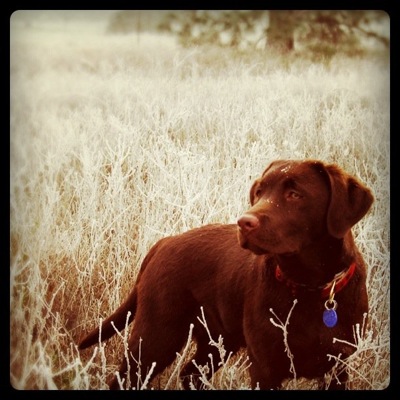
We’d been laying on the floor of Examination Room 8 for an hour. Maybe more. Maybe less. The frigid floor was the kind of cold that seeps into your bones like the damp San Francisco fog. I hardly noticed. My cheek was nuzzled into the warm back of our “brown bear,” my arm draped over her weakened body as she took quick, shallow breaths.

“She’s dying,” I thought to myself. Her body was consuming itself as her liver destroys her own red blood cells faster than her bone marrow can produce new ones. Fewer red blood cells mean less oxygen to vital organs. I couldn’t see it happening, but I could see the result. She wasn’t able to lift her head, much less walk or eat.

Room 8 was our home for two weeks. Two, sometimes three times a day, my wife, three-year-old son, and I made the trip to Sage Centers for Veterinary Specialty and Emergency Care in San Mateo to lie on the floor with our beloved dog. We were referred there by Dr. Harish Narayanaswamy and Dr. Husna Ulla, the husband and wife team at Peninsula Pet Hospital in Menlo Park, where, as residents of Menlo, we’d first visited when our dog Bella got sick.

Before Bella’s illness, I didn’t even know that places like Sage existed. It’s an inpatient animal hospital for critical care — oncology, cardiology, neurology, surgery, and emergency care are their specialties. If you love your pet, a critical care hospital is a place you never want to visit. However, when tragedy or life-threatening illness strikes, there’s no doubt that Sage is exactly where you want to be.

Upon admittance, her case read: Bella Bond, 7-year-old Chocolate Labrador Retriever, presents with severe swelling in the head, snout, and left front leg. The left eye is bulging, presumably from an infection in the sinus cavity or just in front of the brain. The nose and left front paw are close to twice their normal size. There is no sign of a localized source of infection. No snake or spider bite. No foreign body. A possible tick-born disease for Lyme has just returned negative. Typical treatment for generalized swelling from a severe infection is broad-spectrum antibiotics.

Bella at the vet1 Sacred space in room 8   and the miraculous recovery of Bella the dogOn day 5 of Bella’s hospital stay, after one CT scan, numerous ultrasounds, and several rounds of blood work, Dr. Heidi McClain told us that they had some new information. Needless to say, we were desperate for even the tiniest explanation of why our perfectly healthy dog was suddenly wasting away in front of our eyes. We will never forget the moment Dr. Heidi joined us on the floor, visibly concerned yet almost comforting in her delivery of the news.

“There’s been a complication,” she said. “We believe that as a result of Bella’s body fighting off the infection for several days now, a secondary condition has been triggered. We call it Autoimmune Hemolytic Anemia (AIHA), which essentially means that her immune system has gone haywire and is beginning to turn on itself.”

Our minds spinning, mostly around the words “complication,” “haywire,” and “autoimmune,” squelched any remaining optimism. We searched Dr. Heidi’s face for the signs of resignation that we were feeling. Instead, however, she very cautiously explained how she and her colleagues, Dr. Abby Kaufman and Dr. Diane Roberts, felt that if they could just “buy Bella some more time,” there was a possibility that after several weeks of treatment and recovery, she could fully recover.

She explained that AIHA is extremely rare in Labs, but in Bella’s case, the disease had been triggered by the severe infection. Upon further learning that this condition regularly takes the lives of more than half the dogs it afflicts, we gave the Sage doctors and their team of surgeons, nurses, and support staff permission to treat Bella in whatever capacity necessary.

Bella and family Sacred space in room 8   and the miraculous recovery of Bella the dogThe days and weeks ticked by with a gut-wrenching slowness. Bella continued to fight. Multiple transfusions of fresh blood bought Bella the time she needed for the drug treatment to take its course. On two occasions, we grilled a juicy steak and scrambled eggs for what we thought would be her final meal.  However, after almost 13 days in critical care, almost imperceptibly, her red blood cell count began to stabilize to a level that allowed us to bring her home.

Once released, over the course of the next several weeks, we returned to Sage on a daily basis for outpatient follow-up visits, eventually cutting back to every few days. During this time the focus of treatment was mostly continued administration and monitoring of steroids and antibiotics, while also tending to some of the less life-threatening conditions that had emerged.

Now at the end of January, we know that Bella was a dramatically different dog since the day she first arrived at Sage — physically, biologically, and emotionally. AIHA will be a lifelong concern (relapses are not uncommon). However, Bella’s personality and passion for life, relationships, and connection has become stronger as a result of her experience.  She has returned to long walks, prancing in the sand and the ocean waves, riding shotgun with her head out of the window, and occasional visits to Sage. We are so grateful.

Photos courtesy of Matt Bond

{ 2 comments }