



Ideas about how San Francisquito Creek can be prevented from over-flowing

Editor’s note: InMenlo’s series “the other side of the creek” has prompted readers to also reflect on when the creek overflowed — and suggestions on how to prevent that happening.
At this time of the year (late summer, early fall) the San Francisquito Creek is dry — nothing but a 20 foot deep trench between Santa Clara and San Mateo counties.
 When the rains come, however, the creek is a fast flowing stream, filling and sometimes over flowing its banks. Efforts thus far have gone into moving the water, clearing obstacles and reenforcing banks, yet flooding continues every few years.
The time has come to look upstream. Over the years the amount of water fed into the creek, drainage from new buildings, roads, parking lots, etc. has steadily increased the flow. At the same time ground water resupply, another problem, has decreased. The upstream residents and communities seem to be unaware of damage that may be caused and what they could to to help. Here are some thoughts.
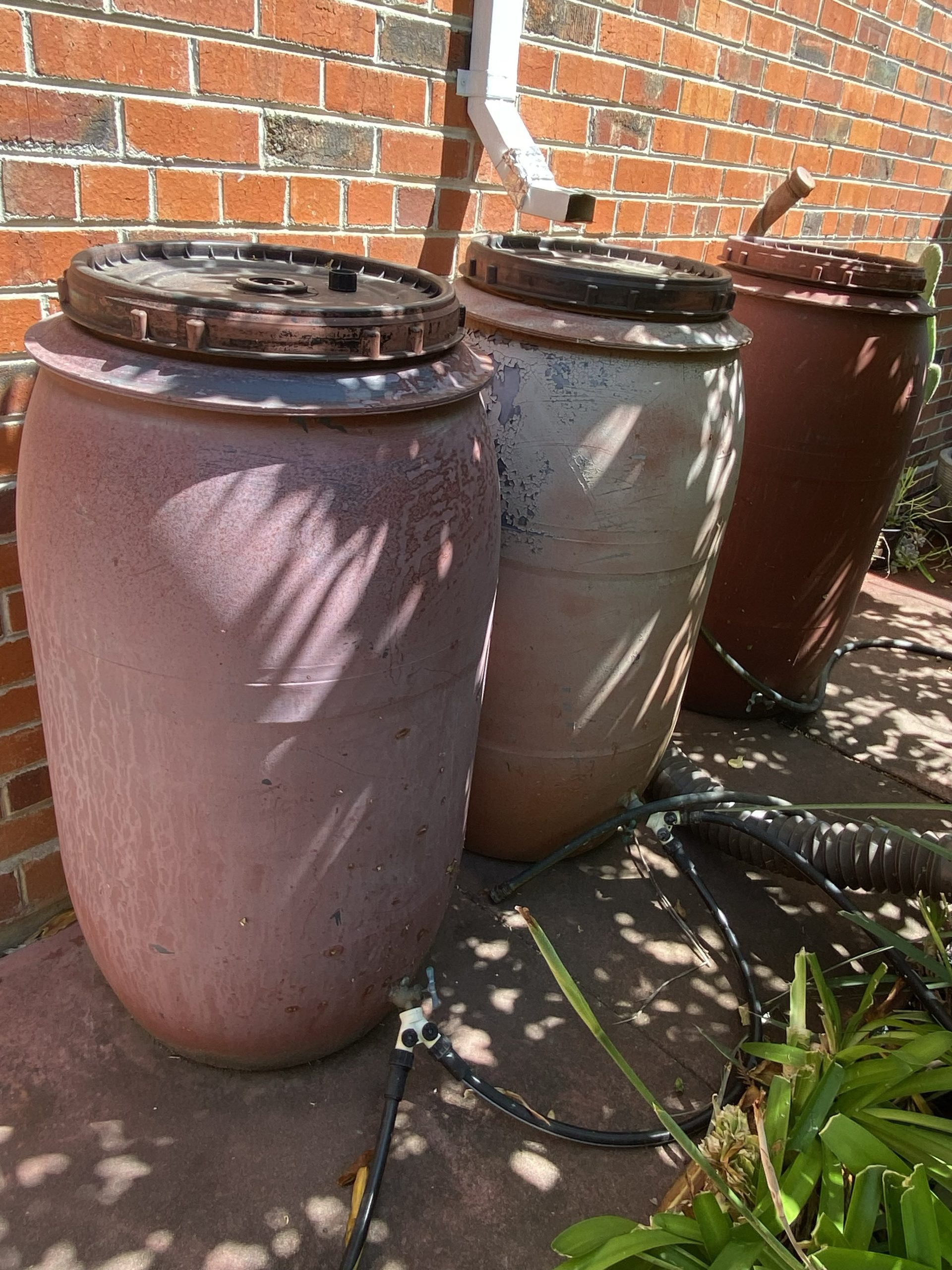
- Rain barrels can be used to store runoff from roofs and the water used for irrigation during the dry summer.
- Driveways and parking areas can be made of permeable structures, as deliberate gaps or specially fabricated materials.
- Rain fall can be diverted to drywells or to cisterns, holes filled with rock from which percolate into ground water. In flood prone areas, cisterns are used to can prevent the escape of water from property boundary using.


Pat September 08, 2025 at 5:40 pm
A number of years ago, and over a summer, large machinery was taken down into the creek and cleaned out debris. A repeat of that exercise cannot be anything but beneficial.
Willows neighborhood September 08, 2025 at 9:35 pm
Rain gardens are great too!
T.D.G September 09, 2025 at 4:27 pm
A truly effective approach to protecting homes from floods involves a combination of strategies. The most crucial first step is to purchase a separate flood insurance policy, as standard homeowners’ insurance does not cover flood damage.
On-property measures include elevating utilities, using physical barriers like sandbags, installing a sump pump, and improving landscaping so the ground slopes away from the foundation.
For long-term protection, a home can be professionally elevated above the expected flood level.
Orwel Hanstemoggerhoff September 09, 2025 at 6:21 pm
Great tips T.D.G!!