


The Other Side of the Creek: Stanford’s Chinese Workers and East Palo Alto’s Flower Farms
 Editor’s note: “The Other Side of the Creek” is a series designed to capture the life and spirit just beyond San Francisquito Creek, the shared landmark separating Menlo Park from the communities to the south.
The approach to the Oval along Palm Drive passes through grounds that Chinese workers helped lay out, plant, and care for. Some of those workers lived in a cluster of buildings in the Arboretum. The cabins are gone, but archaeologists have found pieces of dishes and traces of meals where people once lived.
One of the Stanford estate’s gardeners, Jim Mok, began selling flowers while he still worked on the grounds. Decades later, across San Francisquito Creek in East Palo Alto, Wanda Ching and her brothers spent their summers helping their parents grow chrysanthemums. Their stories come from different generations and different farms. Together they show what it took to grow and sell flowers in a part of the Peninsula where much of the farmland has since disappeared.
When the Farm was a working farm
The farm came before the university. The Stanfords’ Palo Alto Stock Farm bred and trained horses from 1876 to 1903. It was still operating when Stanford University opened to students in 1891. The wider estate also included vineyards, orchards, and gardens.
Chinese employees tended fruit trees and gardens, worked in vineyards and wineries, and raised and trained horses. African American horse handlers and trainers also worked at the Stock Farm. As the university took shape, Chinese workers helped build the Oval and planted the palms along Palm Drive. Their work continued after the planting, as the new grounds needed regular care. Stanford’s account of the workforce
Archaeologist Christopher B. Lowman’s research shows how often people combined jobs and businesses. Members of the wider Chinese community worked as cooks and gardeners, ran laundries and restaurants, or grew crops for sale. Some supported relatives who were still in China. Lowman’s research on the Arboretum community
The homes in the Arboretum
The Arboretum quarters were one of several places where Chinese employees lived on Stanford land. A university insurance map from 1917 identifies the quarters and marks the largest building as the kitchen. Older maps give fewer clues, and few landmarks from that period survive to help researchers locate the buildings precisely. Lowman’s map and discussion
In 2017, archaeologists found a deposit of household refuse that they believe came from the kitchen. It contained Chinese ceramics and food remains. The estate records tell us what people were hired to do. The things they left behind show something of how they ate and lived, and interviews with descendants help put names and family histories alongside those finds. Arboretum Chinese Labor Quarters Project
Jim Mok and the flower business
Jim Mok, also recorded as Jim Mock, supervised Chinese gardeners on the Stanford estate. He lived apart from the workers’ quarters with his wife and children. He and another employee, Ah King, leased land from Jane Stanford to grow and sell flowers. Lowman’s account of the family and Stanford’s account of the lease
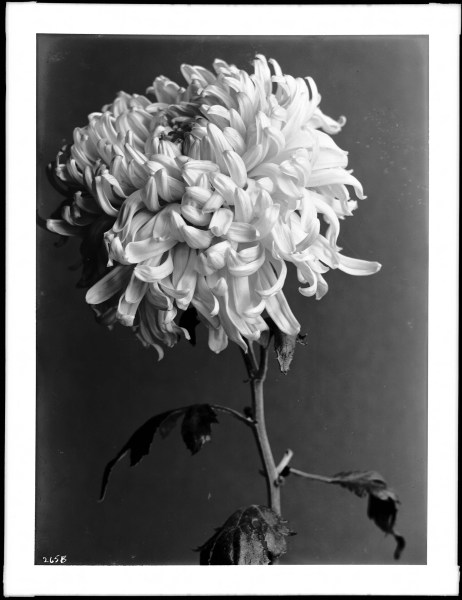
Historian Connie Young Yu, drawing on interviews with descendants, writes that the Mok family moved to Menlo Park soon after the university opened. Mok leased land from Jane Stanford to grow vegetables and flowers and eventually specialized in asters and chrysanthemums. Young Yu’s account of the Mok family
On November 26, 1895, an advertisement in the student newspaper, The Daily Palo Alto, offered cardinal chrysanthemums for sale and told readers to find Mok at the Stanford Nursery. Students wore flowers to the annual football game between Stanford and the University of California. Stanford’s account of that tradition credits Mok with developing a cardinal red chrysanthemum popular with Big Game spectators. The 1895 advertisement and Stanford’s history of Big Game corsages
Work family under exclusion
In his 1862 inaugural address as California governor, Leland Stanford used openly racist language and urged restrictions on immigration from Asia. Chinese workers later helped build and maintain his farm and the university. In 1882, the federal Chinese Exclusion Act suspended immigration by Chinese laborers for an initial ten years. Merchants were among the groups exempted. Stanford’s inaugural address and the National Archives’ account of the act
In 1891, when Mok’s son Wah Him was born in Palo Alto, Jane Stanford gave the baby an engraved silver cup and utensils. The cup bore his name, his birth date, and the image of a flower. Years later, returning from China, he presented the silver to immigration officials as evidence of his American birth. Lorraine Mock’s family scrapbook contains a copy of Jane Stanford’s letter confirming where and when two of Mok’s sons were born. Young Yu’s account of the gift and letter
In 1913, years after Mok advertised his chrysanthemums, California’s Alien Land Law restricted landownership for immigrants barred from becoming citizens and capped their agricultural leases at three years. For families trying to establish a farm, citizenship could determine who was able to buy land or sign a lease. Text of the 1913 Alien Land Law
What happened to the quarters
On November 17, 1925, Stanford freshmen tore down the three remaining Arboretum cabins to fuel a Big Game bonfire. The last resident had already left. The Daily Palo Alto recognized the loss of a historic landmark, but its report overstated both the age of the settlement and the age of its last resident. The paper called him Ah Wu. In the census and other records Lowman checked, he appears as Ah Wah. Lowman’s account of the bonfire
Growing up on an East Palo Alto flower farm
Wanda Ching remembers using her thumbs to pinch off small shoots so a chrysanthemum would produce one large bloom. She and her brothers spent their summers helping on the East Palo Alto flower farm her parents owned from the late 1940s to the mid-1960s. By the end of the summer, she told KQED’s Gabriela Glueck, dirt was packed under her fingernails.
At harvest, her parents tied the cut chrysanthemums in bunches and rolled them in newspaper to protect the blooms. The family sold flowers at its own shop and at the San Francisco Flower Market. Ching’s father left for market at three in the morning. A family photograph from around 1952 shows Ching and her mother, Toi Lonnie Yee Young, standing outside the shop in East Palo Alto. KQED’s interview with Wanda Ching
How a local crop reached distant customers
In October 1948, agricultural specialist H. M. Butterfield reported that growers in San Mateo and Santa Clara counties cultivated about 200 acres of chrysanthemums in a typical year. Roughly three-quarters of the cut blooms went east. It helped to grow near other farms, where supplies such as shade cloth were easier to find and growers had access to wholesale markets. Butterfield’s report in California Agriculture
Chinese, Japanese, and Italian families all took part in the region’s flower trade. Japanese American growers helped build East Palo Alto’s flower industry before World War II. During the war, Japanese Americans were forcibly removed from the area and incarcerated. San Mateo County’s history of East Palo Alto
East Palo Alto was still unincorporated when Ching’s family ran its farm. The area known by that name was larger than the city that incorporated in 1983. Menlo Park and Palo Alto annexed substantial tracts between the late 1940s and the early 1960s. To place a farm from an old address, it helps to start with a map from the same period. The city’s history of East Palo Alto
Where the flower farms were
A Stanford lease map from the 1950s shows flower farms where Stanford Shopping Center, Stanford Research Park, and Escondido Village stand today. University archaeologist Laura Jones and local organizations are using records like this to recover the history of Asian American growers who leased Stanford land from about 1890 to 1960. Stanford’s Forgotten Flowers initiative
A shopper at Stanford Shopping Center today would have little reason to picture a flower farm there. The lease map puts the farms back on familiar ground. The newspaper ad and the photograph give that work a more personal scale. One tells students where to find Jim Mok and his chrysanthemums. The other shows where Wanda Ching and her mother once stood outside the family shop.
Info
General information. The content is provided for general information and editorial purposes. Care has been taken in its preparation, but information may be inaccurate, incomplete, or subject to change. It does not assess your individual circumstances, replace professional advice tailored to your needs, or represent the official position of any institution mentioned. Consult a qualified professional or specialist where appropriate, and check current original or official sources before making important decisions. References to institutions do not by themselves imply affiliation or endorsement.
AI disclosure. AI tools assist with research, summaries, drafting, and editorial review. Their use varies by page and stage of the writing process. Ardan Michael Blum writes, revises, and updates the content, develops its arguments and interpretations, and makes the final editorial decisions. He retains editorial responsibility for what is published.
Close-up of a specimen of a Chrysanthemum, ca.1920 | C. C. Pierce, Public domain, via Wikimedia Commons


Leave a Comment